
Thermal-Power Equilibrium™
The first program question is whether energy production, waste heat generation, coolant transport, heat rejection, material limits, and auxiliary recovery can remain in balance under realistic operating assumptions.
Hilgart Aerospace programs are organized around the Kratos SPX modular propulsion architecture. The strategy is direct: solve the governing thermal and power constraints first, validate each major subsystem independently, then integrate the full platform from measured engineering data.
This page presents the company’s program structure through the new mission framework: Thermal-Power Equilibrium™, subsystem-first validation, modular propulsion architecture, and HUMAN™ automated control systems. The objective is to move from concept to credible technical evidence through disciplined engineering progression.
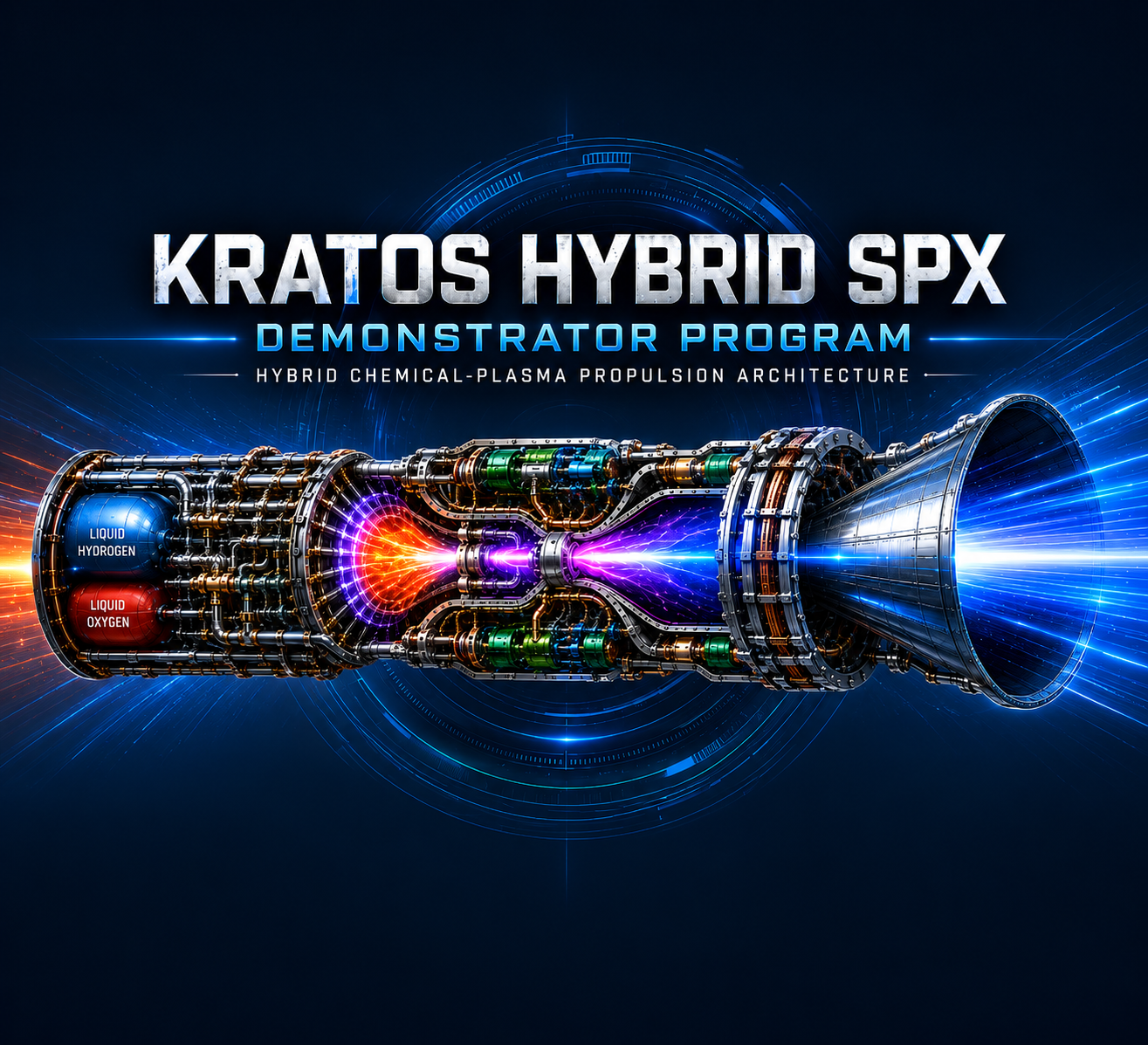
Kratos SPX is presented as a modular propulsion platform, not a single sealed engine. Critical assemblies are separated into defined subsystem tracks so the company can isolate technical risk, improve maintainability, refine interfaces, and validate the governing assumptions before full integration.
The first program question is whether energy production, waste heat generation, coolant transport, heat rejection, material limits, and auxiliary recovery can remain in balance under realistic operating assumptions.
The development path is structured around subsystem definition, modeling, trade studies, review, validation planning, and measured data before final architecture integration.
Each subsystem is designed around defined mechanical, thermal, electrical, control, sensor, and serviceability interfaces to support evolution without full redesign.
Hilgart Aerospace approaches program development through disciplined systems engineering: define the subsystem, identify the assumptions, challenge the assumptions, validate the data, and integrate only after the technical foundation is strong enough to support the complete architecture. This structure allows investors, universities, advisors, and technical partners to evaluate specific engineering problems instead of being asked to assess an entire propulsion platform at once.
The six major SPX tracks define the current technical program structure. Thermal management remains the first validation priority because the power-and-heat balance determines whether higher-energy operation can be sustained reliably.
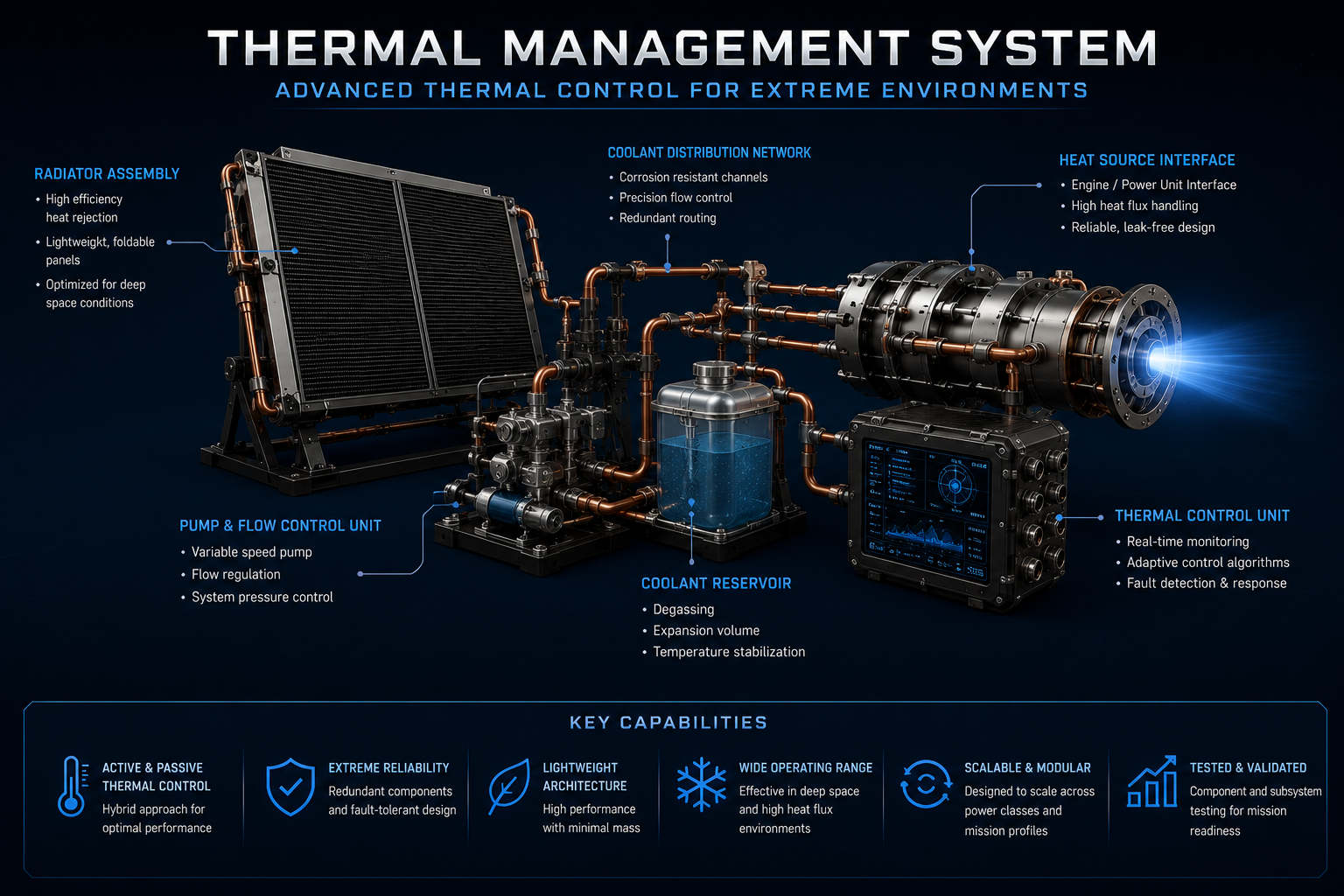
First validation priority focused on thermal-power balance, coolant transport, heat rejection, radiator sizing, filtration concerns, material limits, and subsystem reliability.
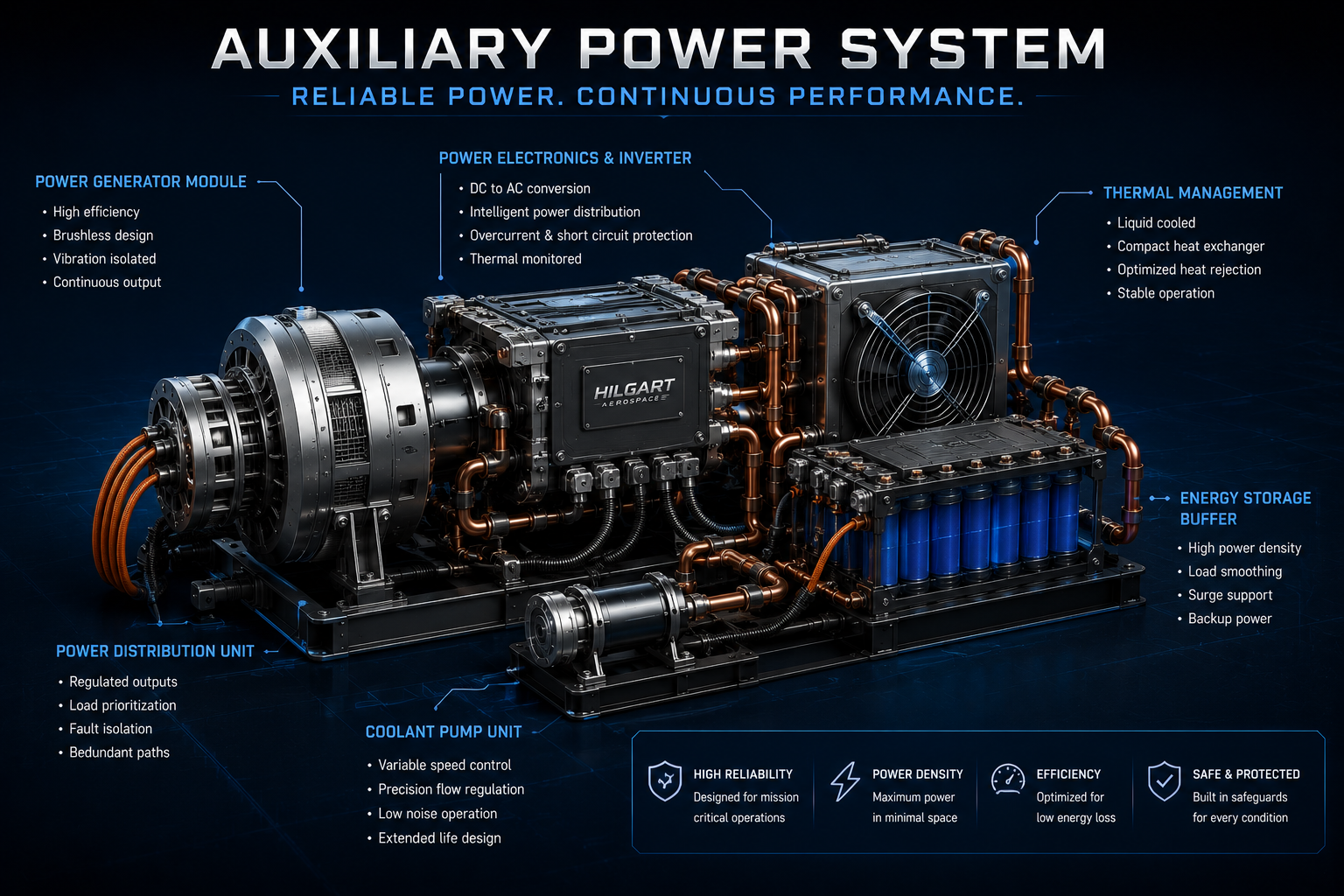
Supporting subsystem focused on waste heat recovery, auxiliary power generation, power conditioning, and integration between thermal management and onboard loads.
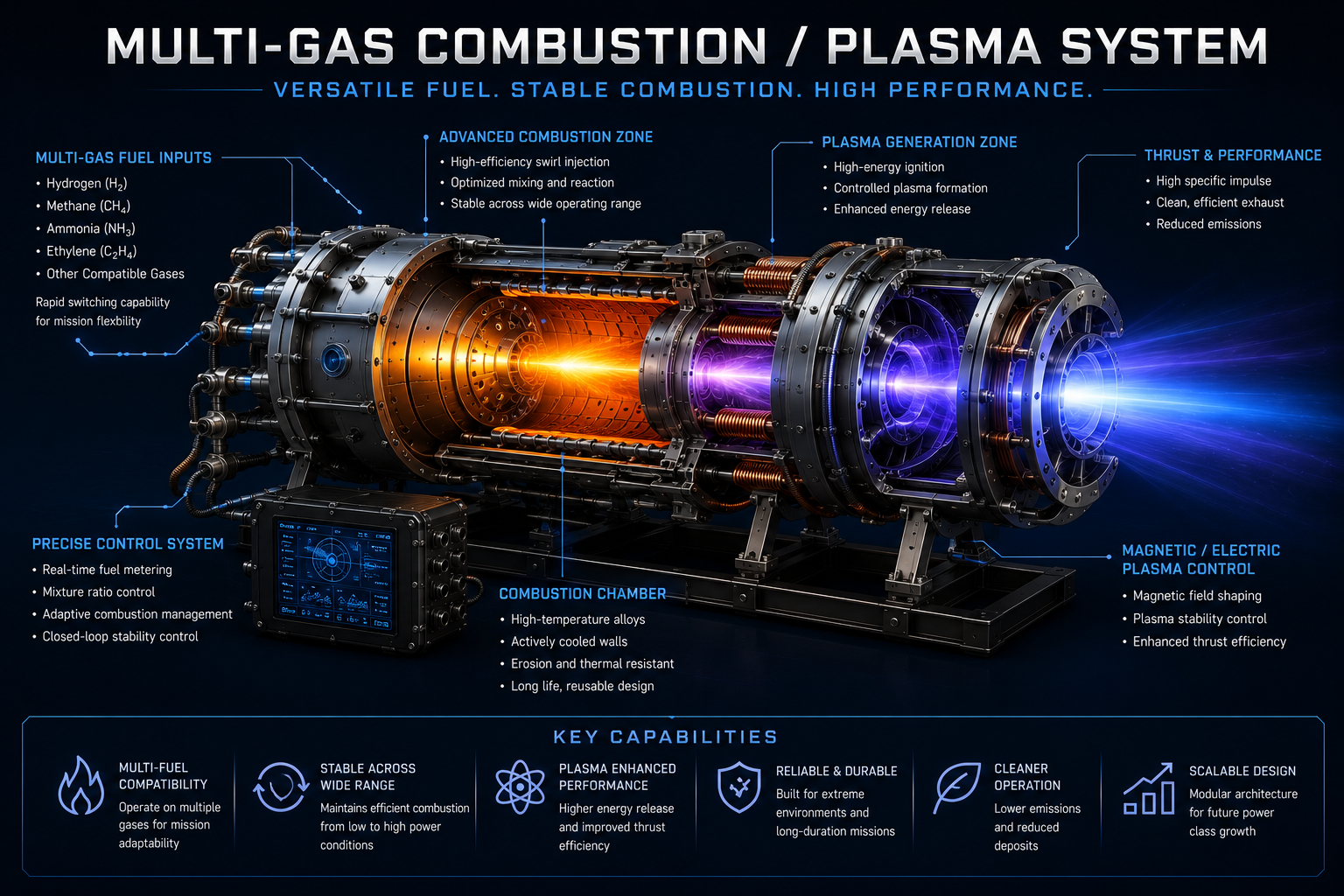
Propulsion-core track focused on controlled chemical-plasma interaction, multi-gas flow management, combustion stability, plasma conditioning, and safe operating envelopes.
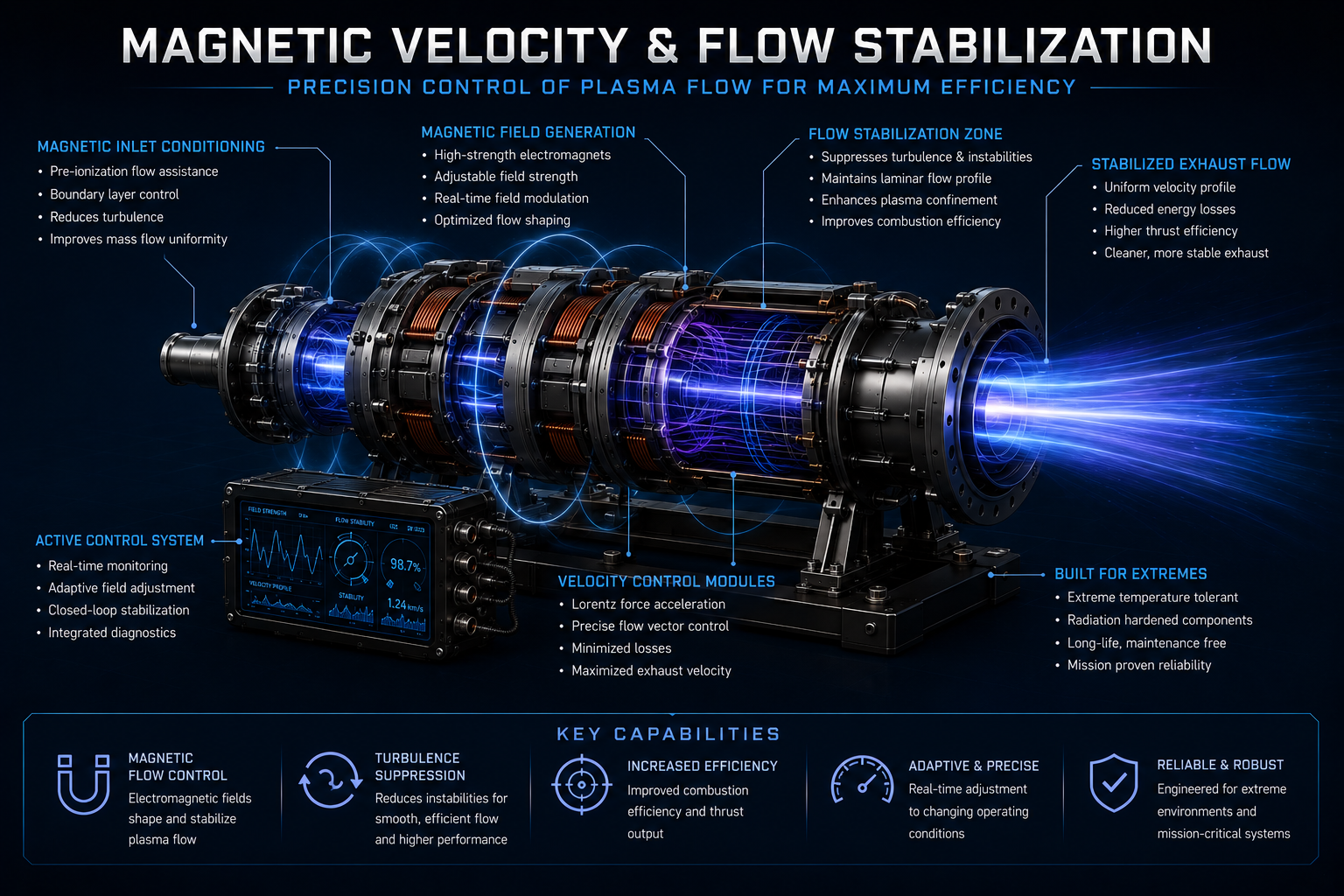
Subsystem track focused on magnetic-field interaction, plasma flow stabilization, propellant behavior, throat control, and performance consistency through the engine core.
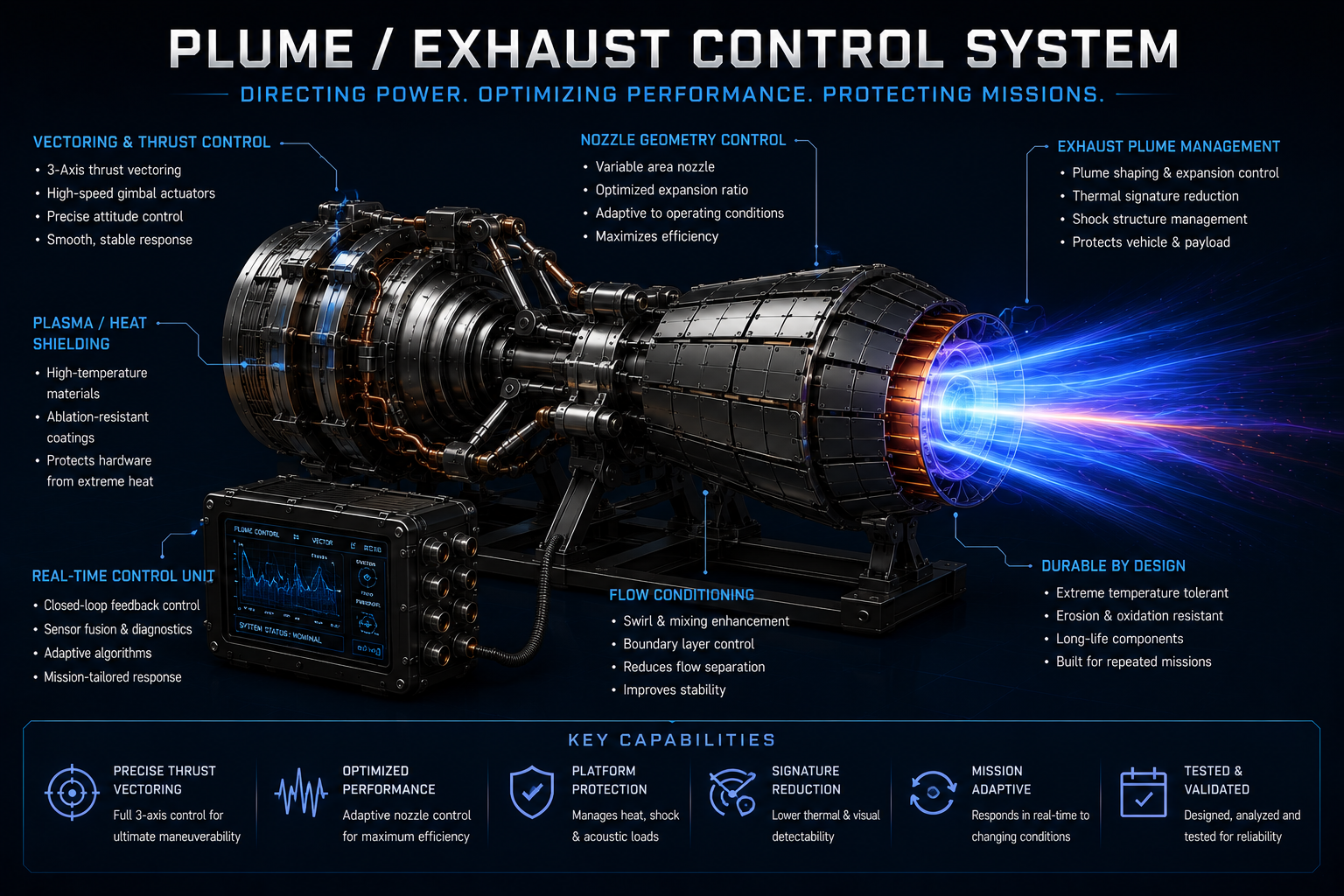
Subsystem track focused on exhaust shaping, plume stabilization, nozzle expansion behavior, vector-control concepts, thermal exposure, and downstream mission-control effects.
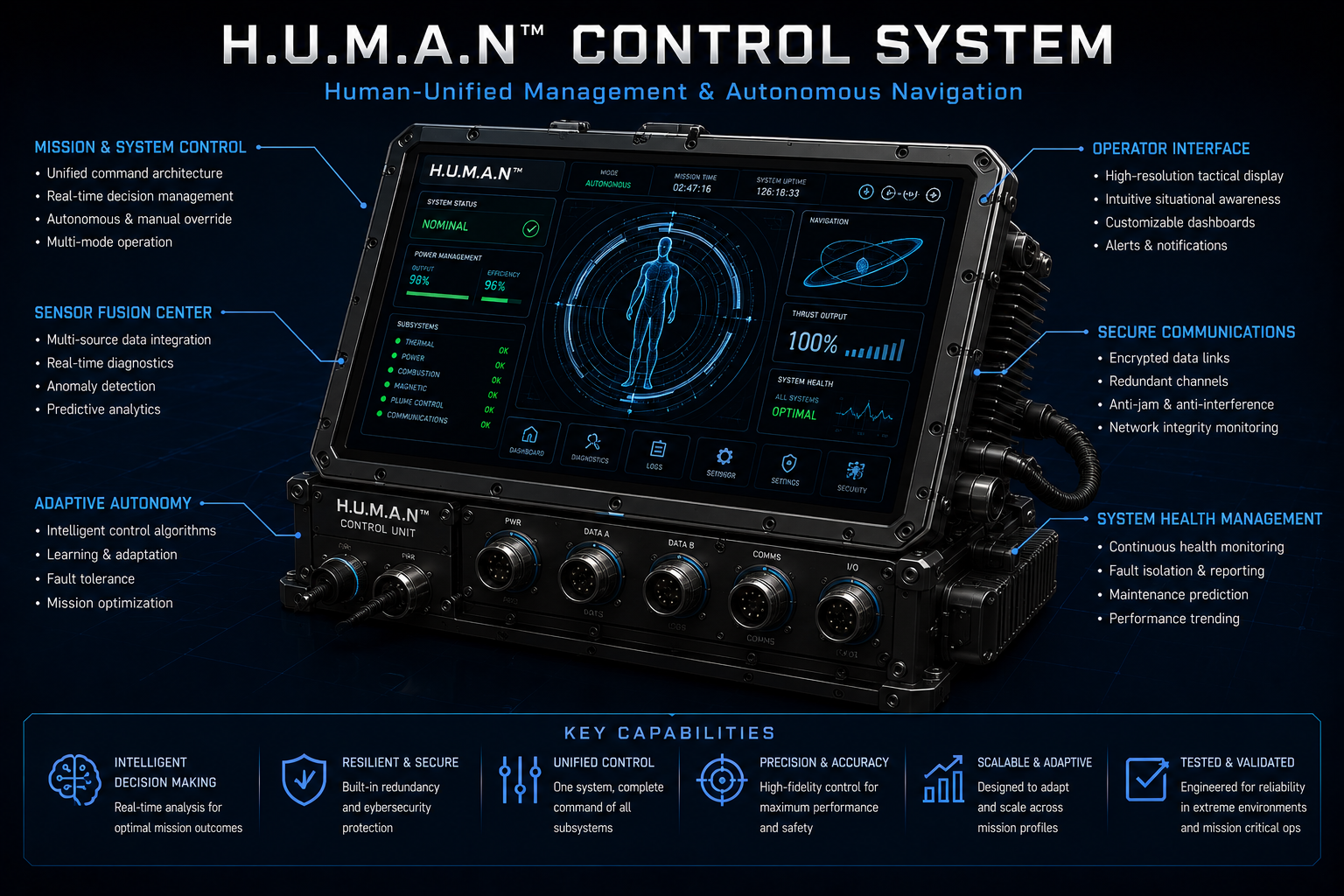
Control architecture focused on monitoring, diagnostics, fault response, subsystem coordination, data processing, autonomous assistance, and long-term adaptive operation.
The thermal management program is not a support item. It is the first governing design question. A propulsion concept can only progress when the heat path, coolant path, material limits, and rejection method can support the power profile.
Energy conversion, combustion, plasma interaction, electrical losses, magnetic components, and high-temperature flow paths create the thermal load that must be measured and controlled.
Coolant pathways, flow rates, pressure stability, manifold design, materials, and filtration determine whether thermal energy can be moved away from critical components.
Radiator architecture, surface area, emissivity, deployment strategy, and auxiliary power recovery determine whether extracted heat can be rejected or reused effectively.
The SPX roadmap is organized around focused subsystem milestones. Each subsystem is intended to move through definition, review, modeling, trade studies, test planning, and validation before complete module integration.
Define interfaces, operating assumptions, performance boundaries, thermal limits, and validation questions.
Review models, drawings, materials, risk areas, failure points, and manufacturing assumptions.
Evaluate coolant media, materials, power balance, controls, interfaces, and alternate design paths.
Prepare test articles, instrumentation plans, university/laboratory review, and milestone funding requirements.
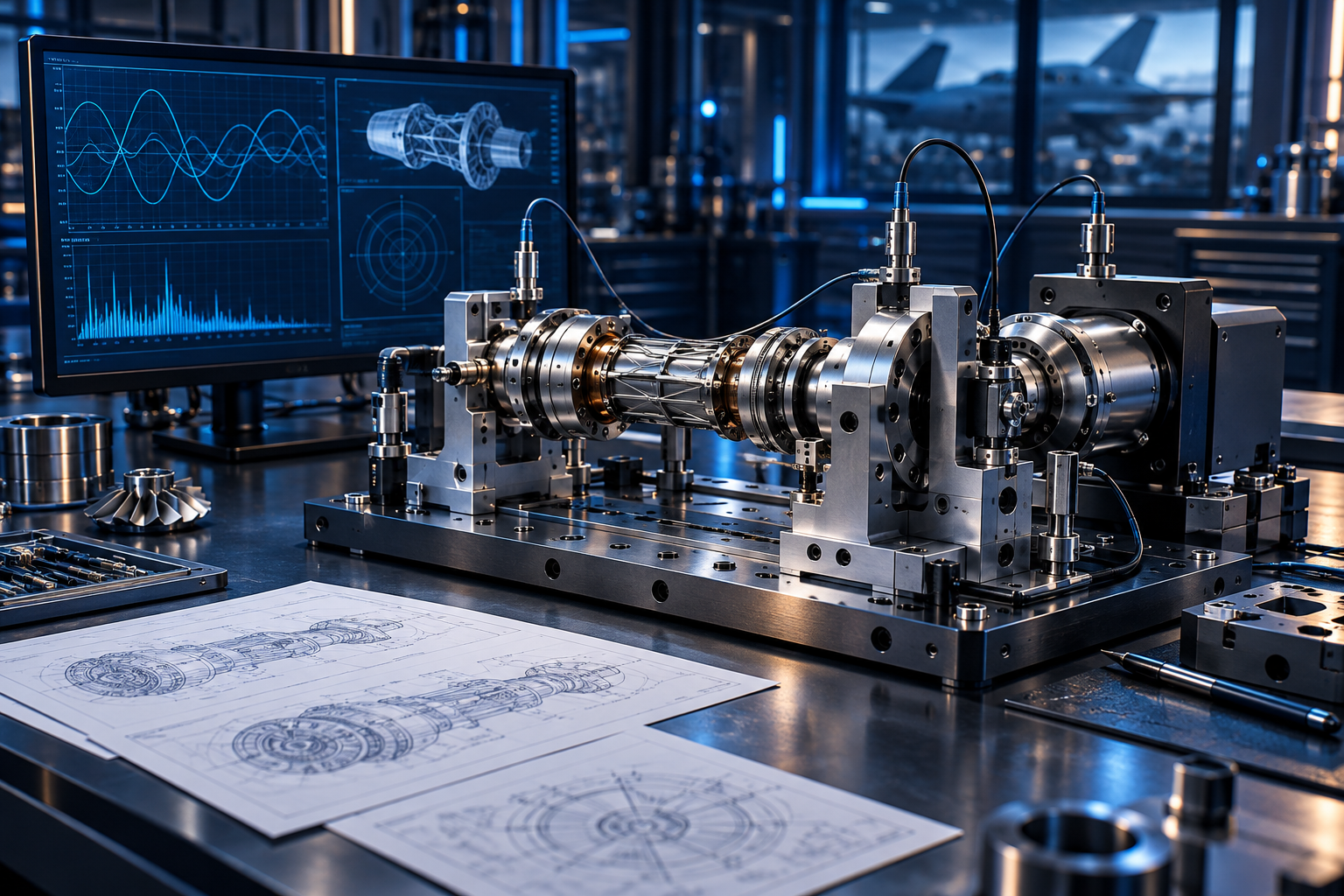
Present the technology through engineering problems, development gates, and validation strategy rather than unsupported performance claims.
Maintain controlled disclosure while documenting subsystem designs, technical assumptions, provisional filings, and validation pathways.
Use university review, advisors, laboratories, and outside specialists to challenge assumptions and improve the engineering package.
Allow data from each subsystem to inform materials, interfaces, controls, safety factors, and final platform integration.
Hilgart Aerospace is building a technical development ecosystem around Kratos SPX, Thermal-Power Equilibrium™, validation frameworks, modular architecture, and HUMAN™ control systems. The objective is disciplined progress from concept to measurable engineering evidence.